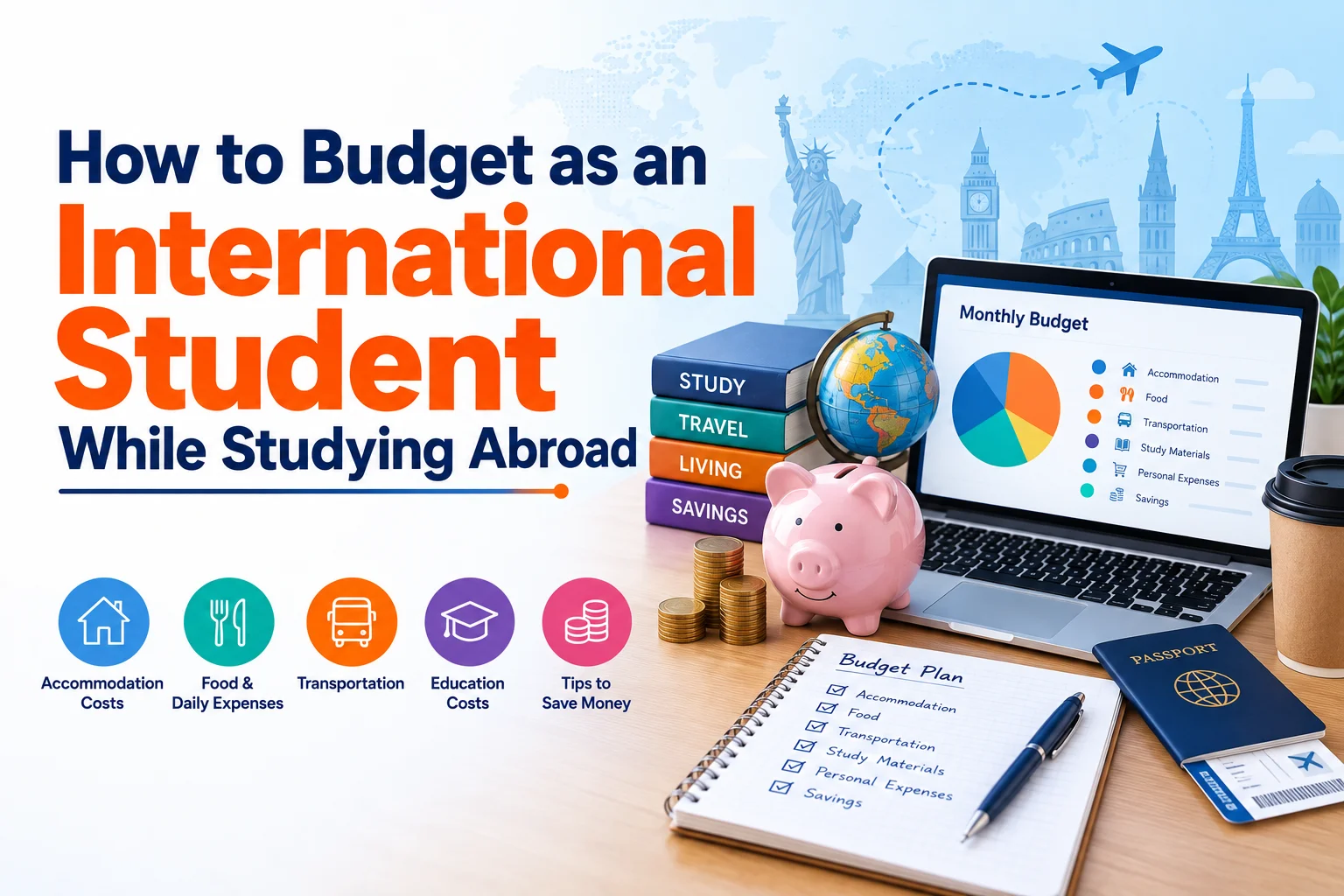
International student budgeting is essential when preparing to study abroad, as it involves more than paying tuition fees, and many students are surprised by how quickly additional expenses add up. Accommodation, food, transport, insurance, study materials, and everyday personal spending can all contribute significantly to your monthly costs, and these can vary widely depending on the country and city you choose. A clear, realistic budget helps you plan for these expenses before you leave, prepare for unexpected costs, and manage your money more confidently once you arrive so that you can focus more on your studies and less on financial stress.
Why Financial Planning is Essential Before Moving Abroad
Financial planning for international students is the foundation of a smooth, stress-free transition when moving abroad to pursue higher education. Map out your finances well before departure, accounting for tuition fees, living costs, travel, insurance, and unexpected emergency expenses.
- Calculate your tuition fees and expected living costs.
- Set aside funds for your visa, travel, insurance, and initial accommodation.
- Account for one-time expenses such as deposits, flights, and essential items.
- Keep an emergency fund for unexpected costs.
- Check the financial requirements for your student visa. For example, UK Student visa applicants may need to show funds for course fees and living costs.
Keeping these costs in mind before departure can help you set a realistic budget and avoid financial pressure after you arrive.
Breaking Down the Monthly Student Budget: Fixed vs Variable Costs
Separating fixed and variable expenses makes your student monthly budget easier to plan and adjust.
| Expense Type | Examples |
| Fixed costs | Rent, utilities, insurance, phone plan, and subscriptions |
| Variable costs | Food, transport, entertainment, shopping, and leisure |
| Occasional costs | Course materials, travel, clothing, and medical expenses |
Understanding the True Cost of Studying and Living Overseas
Your budget should cover both education and everyday expenses. The cost of living abroad can vary significantly by destination, accommodation, lifestyle, and daily spending habits. Tuition fees may form a large part of your total cost, but accommodation and daily expenses can also make a significant difference.
Students considering the cost of study in Ireland for Indian students should account for tuition fees, accommodation, food, transport, insurance, visa costs, and other daily expenses. At NewStrides Consulting Pvt Ltd, we provide guidance on course and university selection, helping students understand the financial considerations linked to their study plans.
The Pre-Departure Financial Checklist for Global Students
Before travelling, review the following expenses and documents:
- Tuition fee payment or deposit
- Student visa and application costs
- Accommodation deposit and initial rent
- Health insurance
- Flight and local transport costs
- Food and essential household expenses
- Emergency savings
- Bank account and payment arrangements
Health insurance requirements depend on your destination. For example, private health insurance is compulsory for non-EU/EEA students studying in Ireland.
Top Money-Saving Tips to Manage Daily Expenses
Small changes can help keep regular spending under control. Some money-saving tips for students are.
- Prepare meals at home instead of eating out frequently.
- Use student discounts where available.
- Compare accommodation options before signing a contract.
- Use public transport and student travel passes where available.
- Set a weekly limit for non-essential spending.
- Buy second-hand textbooks or use university library resources.
- Track your spending regularly and adjust your budget when needed.
These habits can make managing expenses abroad easier while helping students stay within their planned budget.
The Impact of Local Grading Systems on Scholarship Eligibility
Academic performance can affect scholarship eligibility, but the criteria depend on the university, course, and scholarship. International students should check whether they need to convert their grades to the local grading system.
When assessing options like the cost of studying in Dubai for Indian students, some scholarships may consider academic results alongside other factors, such as extracurricular activities, leadership, financial circumstances, or academic achievements.
Balancing Academics and Income: Part-Time Work Opportunities
Part-time work can provide additional income, but students should not depend on it to meet their entire budget. Working hours are also subject to visa conditions.
In Ireland, eligible international students with Stamp 2 permission can work up to 20 hours per week during term time and up to 40 hours during designated holiday periods.
In the UK, eligible degree-level students can generally work up to 20 hours per week during term time, subject to their visa conditions.
A realistic budget should therefore be based on available savings and confirmed funding, especially when planning the cost of studying in the UK for Indian students, with part-time earnings treated as additional support.
Conclusion
Budgeting as an international student is not just about managing money; it is about building financial confidence for your entire study abroad journey. By planning, tracking your expenses, and making informed choices, you can reduce financial stress and focus more on your studies and experiences.
Every student’s situation is different, but a well-structured budget helps you stay prepared for both expected and unexpected costs. With the right planning and guidance, studying abroad can be rewarding and financially manageable.
FAQs
1. What is the most effective way to start international student budgeting?
Start by listing your tuition fees, accommodation, food, transport, insurance, visa costs, and other expected expenses. Then separate fixed costs from flexible spending.
2. How much should an international student save for monthly living expenses?
The amount depends on the country, city, accommodation, and lifestyle. Check the financial requirements for your destination and add a buffer for unexpected expenses.
3. What are some of the best money-saving tips for students to manage expenses abroad?
Cooking at home, using student discounts, choosing affordable accommodation, using public transport, and tracking weekly spending can help reduce regular costs.
4. Does the cost of study in Ireland or the UK include health insurance?
Health insurance arrangements differ by country and visa status. For example, private health insurance is compulsory for non-EU/EEA students studying in Ireland, while UK students generally pay the Immigration Health Surcharge as part of their visa process.
5. Can part-time work cover my total student monthly budget?
It should not be your only source of funding. Work-hour limits apply to international students, and earnings can vary depending on the job and hours available.

Supriya Sawant is an accomplished Education Counsellor and Manager with 7+ years of experience in guiding students toward academic success. Specializing in higher education opportunities in the UK and Ireland, she is a trusted advisor and a favourite among her students. Supriya is known for her approachable style, insightful guidance, and dedication to student growth.