Unlock Your Academic Dreams: Studying a Master’s in Ireland without IELTS

Studying abroad has become an option for many who intend to proceed to the next level of learning, and Ireland is gradually becoming one of the preferred destinations. Being an island state, this nation houses some of the best universities across the globe, positive culture and immigration policies allow anyone interested to achieve a memorable educational experience. However, one common question that many students who wish to study in these universities ask is: do you have to take the IELTS test? The saving grace is that there are a lot of pathways that one can take to get into a master’s program in Ireland without having to produce an IELTS score.

Understanding the Language Requirements

First of all, let us discuss the language demands international learners are subjected to in Ireland with respect to the alternatives below. Although the language issue is recognized to be important, especially in the case of the English language, the universities in Ireland realized that means such as IELTS are not always genuine predictors of an individual’s ability in the language. Consequently, the majority of institutions came to adopt and accept rather relaxed policies in this context, providing the students with an opportunity to prove themselves in more ways than one in terms of their English language proficiency.

Understanding Different Methods of Demonstrating English Fluency

Another one of the simplest ways of substituting IELTS is to present a certificate of previous education in an English Language environment. For example, if you have finished at least a three-year bachelor’s level programme or an equivalent level of education in a country where English is the medium of instruction for the majority of the curriculum, it is possible to be exempted from presenting the IELTS test scores. This recognition addresses an understanding that integration into the English spoken academic culture fosters the accomplishment of language competence.

The second entry point is when one can produce an accurate academic transcript or certificate showing the English language course passed. This is especially the case for all standard English-taught programmes and coursework in Ireland, where the following recognized English language qualifications are accepted: Cambridge English and the Pearson Test of English (PTE) Academic. These tests are the tests that check all sorts of faculty and can be used as IELTS replacement.

Furthermore, numerous colleges provide conditional entry or route courses to students who do not meet the initial language requirements. These courses frequently require students to finish an English language course or foundation curriculum before proceeding to the desired degree track. 

Advantages of Studying Masters without IELTS

To elaborate, this paper will argue the following: There are a few reasons why the absence of an IELTS requirement for getting a master’s degree in Ireland is advantageous. First and foremost, I was free from the concern of learning for and passing the IELTS exam, not to mention the additional amount I had to spend for the purpose. This is helpful especially for students with great difficulties in standardized testing or those that have challenges physically accessing IELTS centers.

In addition, some students will also cut down the time that they would spend taking an IELTS test, and focusing on issues that can help them do more important things like searching for the relevant programs, writing interesting and persuasive personal statements and other affairs needed to get the necessary funding. Sustained added practice can, in the long-run enhance their chances of being considered for admission in the preferred colleges and programs.

In addition, study masters in Ireland without IELTS has other advantages concerning admission, which is, the test allows for a more accurate assessment of a student’s abilities. In this way, instead of focusing on the scores obtained in the uniformized tests, the universities may consider a wider range of educational achievements, including all the records, personal statements, letters of recommendation, and prior experience in working or researching. It takes cognizance of the fact that language proficiency is not a one-dimensional affair and who can prove it in more ways than one.

Exploring Program Options and University Policies

When considering studying master’s in Ireland without IELTS, it’s crucial to research the specific policies and requirements of your desired institutions and programs. Each university may have its own set of criteria and acceptable alternatives for demonstrating English language proficiency.

It can make sense to visit the official website of every university where you want to enrol or address the admission office to learn more about specific requirements and possible equivalents to your chosen program. Also, participating in sessions such as virtual or face-to-face information sessions may help you gain more information and even address possible questions about the demanded languages as well as other aspects of admission.

Embracing the Irish Educational Experience

The lack of restrictions specifically related to the IELTS requirement in Ireland for master’s programs introduces the opportunity to receive a great education. In addition to the high-quality education, Ireland provides an opportunity to experience cultural tourism, seen through modern cities, beautiful landscapes and the welcoming population of the country. By availing this opportunity, you will not only add great features to your academic history but also expand your spheres of development.

Finally, some tips to help you in this endeavour include being systematic, carrying out extensive studies, and seeking academic advisors and International Students’ Support Services whenever you find yourself in a fix. If you approach it right and commit the time and effort required with rigour and professionalism, there is no reason why you should not be able to negotiate the admission phase and open the door to a life-altering education affair within the friendly premises of Ireland.

Conclusion

However, language is not the only barrier to student life in Ireland has been devoted to opening higher education opportunities for everyone. It is common for many universities to have provisions for scholarship schemes and other financial assistance for international students which serves to lessen the obstacles towards their academic pursuits. Furthermore, there are sponsorship programmes like the Third Level Graduate Scheme launched by the Irish government, under which qualified international students can work and look for employment in Ireland on the successful completion of their courses. This versatility would be highly desirable, especially for those looking to gain relevant experience and set them on the path to undertaking professional experience in Ireland or elsewhere in the European Union.

Your Gateway to Ireland: A comprehensive guide to the 2024 admission process and requirements

With the standard procedure of globalization becoming the new norm in the global society, the global appetite for quality higher education keeps rising. Ireland provides a competitive educational experience, and with its vibrant and unique culture along with premiere academic schools, Ireland is a great place to study. To help readers who want to learn about the Ireland admission process and requirements, particularly for the 2024 academic year, we are going to explain the steps involved in the admission process fully in this article.

Why Study in Ireland?

Before we dive into the admission process, let’s explore why Ireland has become a sought-after study destination for students worldwide:

  • Internationally Recognized Qualifications: There are several universities and colleges in Ireland that are at par with the best international universities, delivering internationally accredited courses that can pave the way to successful careers.
  • Vibrant Student Life: Cultural diversity presents itself vividly with regard to the student body, and these cultures are fostered fully with very many social and co-curricular activities in Ireland, enhancing the learning experience.
  • Safe and Welcoming Environment: Students from all over the world have reported that Ireland is relatively safe and that the people are friendly, which makes them feel comfortable while studying.
  • Rich Cultural Heritage: Proud castles and old buildings, breathtaking cities and economic centres, and charming countryside and seascapes – all this makes the learning experience in Ireland even more valuable.
  • Global Exposure: The institutions in Ireland draw learners from across the globe, making the learning environment to be accommodative to international students, hence strengthening the culture of globalization and diversity.
  • Career Opportunities: Several manufacturing organizations have their branches in Ireland and therefore offer very good employment opportunities for graduates as well as internships in different career areas.

The Ireland Admission Process for 2024 Intake

The step-by-step process of Ireland admission requirements are as follows:

  • Research and Choose Your Program: Learn more about the universities and colleges in Ireland and then shortlist those institutions offering courses in your areas of study or intended career paths. Other aspects to bear in mind include program rankings, the type of program that an individual would like to take, the facilities offered and the possible job opportunities.
  • Check Entry Requirements: Due to the unique nature of each institution and program, it is crucial to provide academic records, have satisfactory scores in English language proficiency tests such as IELTS or TOEFL, and other relevant requirements. It is important to make sure that one satisfies all these requirements quite some time before the scheduled date.
  • Gather Required Documents: Gather all the required papers where they include contractual information, academic transcripts, standardizing test scores, personal statements, reference letters and all other documentation that may be required by the relevant institution.
  • Apply Early: Admission in many universities and colleges in Ireland is on a continuous basis, or they have particular date for admission for international students. To get into whichever university one wants to attend, it is advisable to apply early enough in order to enhance the chances of getting a place in the desired program.
  • Submit Application and Supporting Documents: Application requirements vary depending on the program so read all the instructions carefully and prepare your application along with documents in due time. While some of them may have it that the only accepted mode of application is through the Internet, others have it that they accept physically filled application forms.
  • Attend Interviews (if required): Sometimes, the employer, as part of particular program or institution, may call for an interview, either face to face interview or an online interview. 
  • Arrange Accommodation and Travel: Once you’ve obtained your visa, plan your trip to Ireland. Many colleges have on-campus housing, or you might look into private lodging choices in the region. Consider interacting with current students or alumni networks to acquire insights and recommendations for adjusting to life in Ireland.


Ireland Admission Requirements for 2024 Intake

While admission requirements may vary across institutions and programs, here are some common requirements for international students applying to study in Ireland in 2024:

  • Academic Qualifications: Before applying, there are academic standards, such as the minimum grade point average that must be met depending on the institution and the program you wish to join. This usually signifies a high school education or an equivalent and must have earned the necessary passing grades in the subject areas of the course.
  • English Language Proficiency: English is the most common medium of communication in teaching and learning in most programs and hence one will be expected to prove their English proficiency before being considered for admission into any of the universities in Ireland. Acceptable tests include IELTS, TOEFL or any other test of equal rigor to ASL. They all have minimum cut-off points but these differ from institution to institution.
  • Personal Statement: Personal statement or essays are normally a standard fare of most universities and colleges as they set them as a condition of admission. This entails providing information bearing on the applicant’s motivation, interests, and suitability for the program. Learn how to write a powerful and genuine narrative essay that shows you as a person and gives insight into your goals.
  • Letters of Recommendation: You might be asked to provide letter(s) from teachers, professors or your employer to write about them reflecting your academic performance, character, etc. That means one should choose recommenders who are familiar with one’s work or performance and could provide informative as well as positive feedback.

Conclusion

Understanding the admission procedure and requirements for Ireland’s 2024 intake can help you prepare and boost your chances of getting into your selected programme. Remember to begin the application process well in advance, since certain colleges may have early deadlines or rolling admissions. Additionally, keep track of any modifications or revisions to the requirements since regulations may alter over time.

Studying in Ireland brings a unique possibility to immerse oneself in a rich cultural record at the same time as additionally gaining a global-class education. With careful planning, perseverance, and interest in the doorway standards, you can start on a high-quality educational adventure to the Emerald Isle, wherein personal growth, highbrow interest, and lifetime friendships emerge.

Benefits of Doing Big Data Management Course in Ireland

Big data management has been transformed into a critical component of an enterprise, whether for associations, companies, or the government. With progress of this science, there is continual manifestation of discoveries and it is impossible to become a master of everything.

Management of a huge quantum of Big data is the focus of information science. Institutions in Ireland are highly reputed for concentrating huge quantum of data. With the progress of trend-setting innovations, businesses have realized the importance of data science and data scientists.

Because of the rise of interest in data science, many colleges and institutions in Ireland have adopted courses in this field. As such, data management course in Ireland is one of the most sought-after courses in the field of education.

Dublin, the capital city, has become a hub for global companies and organizations, with Ireland becoming the most important centre point for worldwide analytics. As such, besides gaining a real-life opportunity to study data science, students from Ireland have the chance to practice their skills.

 In case you are bent on pursuing a course in Big Data management in Ireland, you must judge how this will impact your choice of career and why you intend to pursue this program. Currently, Big Data is used in several sectors of business. Hence, the need for this program is significant.

Why is a big data course in Ireland a prime choice?

Because the quality of education in Ireland enjoys a high repute globally, it is also the best place to study Big Data management. Universities and colleges in Ireland offer plenty of opportunities for international students to pursue such programs.

For instance, the University of Dublin provides a unique approach to pursuing Big Data courses in Ireland. After gaining a Bachelor’s degree in Maths, Statistics, Information Science or Econometrics, many students like to pursue masters in Big Data management, especially in Ireland. Ireland is home to many companies that wish to employ data scientists, thus making it easy for students to gain employment.

Many companies in Ireland are busy pursuing projects related to Artificial Intelligence. It is a known fact that Big Data comprises the foundation for AI. Before starting AI projects, a company must first make arrangements for its data. The same methodologies and abilities are used to develop AI as the use of Big Data. Thus, Big Data is valuable for AI ventures.

Since the last few years, there has been an upheaval of interest in Big Data. The management of the latter is focused on problem-solving and statistics. Students can specialize in Data Analytics by gaining a Master’s degree in Big Data management. Subsequently, they can work for different companies in Ireland.

Many businesses find it lucrative to invest in Data Science. Managers of Big Data stipulate the path for storing, organizing, and managing thousands of Terabytes of inbound data. Such data must be stored legally and safely while being easily accessible to managers and investigators who will simplify it.

Big Data is also concerned with data-driven decision making. It refers to the art of making decisions based on information gained via research. This is in contrast to decision-making based on human instinct. Students of Big Data management who have major practical experience in decision making are much wanted by companies.

Big data expertise is desirable for basic planning and research for many commercial firms. This field is evolving continually, creating a demand for more and more creative professionals. Therefore, several MBA students are opting for Big Data management as a popular career path.

Pursuing courses in Big Data Management in Ireland is beneficial for students who require to grow later in their careers, given the enormous demand for data science professionals. There is a high demand for Data Analytics in the employment market in Ireland. Also, executives who run big data programs need to continually update their skills. 

Another attractive aspect of the field of Big Data is the generous compensation. Most corporate organizations pay Big Data specialists handsomely, even more than other IT professionals. This is because courses in Big Data management are offered by very few colleges and universities and so there is a limitation in the supply of professionals in this field in Ireland. Therefore, many graduates choose to pursue post-graduation in Big Data management in Ireland as the courses are of high quality and provide opportunities for practical training.

Why Ireland?

Ireland has become a hub for data analytics because many global companies have invested a lot in infrastructure in this country. In fact, Dublin is home to many huge MNC’s as well as small start-ups.

In comparison to other countries, Ireland stands at the forefront because it has established Big Data as a critical sector. The government continues to make heavy investments in research ventures in this sector to exploit the potential of the country in the field of ICT and related sectors.

The modern era has seen the evolution of the global village with greater interaction and integration of people and companies from all over the world. This is perhaps one of the reasons why students from around the globe flock to Ireland to hone their knowledge and skills.

Therefore, colleges and universities in Ireland offer all students the chance to gain real-world practical experience in this field, making it a great opportunity to study in Ireland. They match students with suitable companies and provide a stipend to cover their schooling expenses. Such job opportunities may be completed all through the middle of the school year, permitting students to focus on their studies and also gain precious experience at the same time.

As such, students of Big Data management are ready to enter the job market as soon as they finish their course. The Irish government has permitted a two-year work visa for non-EU students after completion of their graduate degree.

Ireland is committed to research projects in Big Data, rendering it as a hub for ICT and related sectors. Such investments in research attract students to this country.

Studying in Ireland exposes students to intentional experience as well as contacts. Dublin attracts students from all over. Such global exposure stands students in good standing in the job market.

In sum, these are some of the reasons why Big Data management courses in Ireland are prized highly by students from all over the world. They can gain valuable practical experience, and their skills are in high demand in the job market.

MS in Computer Science in Ireland: Complete Guide

Are you a student seeking an excellent computer science degree in a foreign country? Stop right here Ireland is the top destination in Europe for high quality tech education and a lucrative career in computer science afterwards.

Being a center for globally leading tech firms, Ireland provides matchless access to expert teachers, industry leaders, top career opportunities and cutting-edge research. Launch your journey in computer science by pursuing a master’s degree from Ireland which is created for equipping you with valuable skills in flourishing areas like Machine Learning (ML), Artificial Intelligence (AI), Data Analytics etc.

The leading Irish Universities aid you to acquire advanced skills in computer technology while taking part in influential projects that will catch the eye of potential employers. You can customise your degree on the basis of career goals by pursuing flexible courses that cover sub-domains such as software engineering, autonomous systems and cyber-security.

These benefits, coupled with the latest sanction of a 2-year post-study work visa, help one to kick start a global tech career soon after graduation. Thus, working for masters in computer science in Ireland is surely a rewarding pursuit.

Benefits

High quality education

There are many universities and colleges in Ireland which provide MS in Computer Science in the country. The most of such institutions for Computer Science provide a 2-year MSc program of high quality for global students.

Great potential for lucrative jobs

In the last five years, there has been a tremendous upsurge in IT job prospects in Ireland. Hence, it serves as a perfect educational destination for students targeting lucrative jobs in the computer science industry.

Nursery for start-ups

The MS in Computer Science Program in Ireland has been so designed as to encourage students to launch their very own start-ups soon after finishing their course.

Affordable and budget-friendly

Compared to its counterparts in the rest of the world, Ireland offers post-graduate courses in Computer Science at much less costly and more affordable rates.

Eligibility criteria

When you choose to pursue a master’s degree in Computer Science in Ireland, it will serve as an entry to a vibrant eco-system of technology, a high-quality educational system and bright opportunities for a career in this field.

To become eligible for masters in Computer Science at an Irish University, you should satisfy the following stipulations:

  • Possess an undergraduate degree in related fields like engineering, maths, and science with a minimum score of 60%.
  • Prove proficiency in English language, certified by submitting scores from recognised tests like TOEFL, IELTS, PTE or equivalent. The specific scores depend on the stipulations of the particular university and may vary between institutions.
  • Submit documents as per university guidelines, such as SOP (Statement of Purpose), LOR (Letter of Recommendation) and Resume.

Application procedure

Following is a step-by-step guide to apply to Ireland universities for MS in computer science:

  • Set up a timeline: Intakes to Irish universities and colleges start in February and September. It is vital to note that such typical timelines may vary a bit across varied universities, so it is best to verify the timelines with the university or college you have chosen.
  • Determine the category of students: You must establish whether you are an EU student or a non-EU student since it can impact the requirements and process of application.
  • Choose university and course: select the specific university and course that matches your academic as well as career objectives.
  • Ascertain eligibility: Browse through the university website to confirm admission prerequisites and criteria for eligibility.
  • Submit an application online: Fill out the online application and submit payment of non-refundable fees.
  • Collect and upload the right documents: Collate the needed documents such as updated resume, SOP (Statement of Purpose), passport-sized picture, copy of passport, certificates of undergraduate degree, scores of tests for English language proficiency, Academic transcripts, scores of aptitude tests (if required), LOR (letters of recommendation) and Proof of funds.

Cost of studying

This is a big factor impacting study in Ireland. The cost of study of MS in Computer Science in Ireland depends on the university. Public universities are much cheaper than private ones. But, on the whole, the cost in Ireland is much lesser than the cost in other European counterparts.

The typical MS course in CS consists of a 2-year program (4 semesters). The range of the average tuition fee for such courses is between Euro 10,000 and Euro 25,000 per year for foreign students. The cost-of-living amounts to Euro 800, on average, in a month. But this depends mostly on your lifestyle.

Top Universities

Some of the top colleges and universities offering MS in CS in Ireland are as follows:

  • Trinity College Dublin (MSc in CS, MSc in high-performance computing)
  • Technological University, Dublin (MSc in CS, MSc in Data Science)
  • National University of Ireland in Galway (MSc in CS for Artificial Intelligence, MSc in Enterprise Systems, Data Analytics)
  • Maynooth University (MSc in CS, MSc in Software Engineering).
  • University College, Dublin (MSc in CS)
  • University College, Cork (MSc in CS, CS in Applied Computing Technology)
  • Waterford Institute of Technology (MSc in computing- enterprise software systems)
  • Dundalk Institute of Technology (MSc in computing)
  • Dublin Business School (MSc in Data Analytics, MSc in Business Analytics and MSc in Fintech).
  • Dublin City University (MSc in computing- Blockchain technology).
  • Griffith College Dublin (MSc in computing)
  • CCT College, Dublin (Applied Software Development and Data Analytics)
  • University of Limerick (MS in software engineering).

Scope of the program

Ireland has a highly developed market for the IT and software sector and is quite promising for graduates in Computer Science. With its reputation as the computer games and internet capital of the world, Ireland is a hub for global IT companies. 

The latter recruits a huge number of computer science professionals every year. As such, after completing their MS in CS in Ireland, students can hope to pursue attractive careers in this field in Ireland or elsewhere.

The average pay for CS graduates from Ireland ranges between 37,000 EUR to 55,000 EUR in a year. Some of the top companies recruiting MS graduates in Ireland include Dell, Cisco, Intel, Apple etc.

In sum, Ireland has developed into a leading IT hub. Its thriving IT industry and the growing presence of ICT firms have rendered the pursuit of an MS in Computer Science in this country highly attractive for international students.

Choosing the Right Course and University in Ireland

The Emerald Isle, or Ireland, is a place that has much to propose- fascinating culture, captivating views, and first-class schools. Whether a domestic apprentice or a scholar from another country, choosing the appropriate course and university for masters in Ireland is an event that can impact one’s future profoundly and could forever shape one’s professional vocation and moral growth. Hence, in this blog, you will explore all the essential aspects of the future journey, giving you the informal tools to make the rational decision that will meet your vision and drive.

Discover Your Passion

The first stage on the way to your perfect course is the exploration of your interests, abilities, and dreams. What subjects interest you? What career do you feel passionate about? Finding the answers to these questions can be an extremely helpful experience as it will enable you to detect the fields of study that are close to your heart. As previously stated, passion will be the factor that determines the outcome of your learning experience.

Research, Research, Research

Collect sufficient intelligence since knowledge is power. In this regard, extensively research the various courses provided by Irish universities as well as the curriculum used in the courses offered. Get firsthand information not only from the official websites but also from the current alumni. Additionally, ascertain their importance and industry relevance.

Consider Your Future Career Prospects

In addition to exploring what drives you, keep in mind what kind of career lies ahead for consideration upon completion. Assess the job market: what areas are increasing in popularity and what is in high demand in Ireland and around the world? Make sure your courses will give you expertise and experience in your area of interest and will help you develop skills that will make you competitive.

Location, Location, Location

Due to the significant diversity of landscapes, which differ not only in location but also in the way they represent a specific blend of cities and towns, their status, and culture, while some are busy centers like Dublin, others are peaceful rural corners. This peculiar feature determines the environment of an individual’s academic experience.

Cost and Financial Aid

It gives people the tools, information, and skills that they require to thrive and live full work lives in society. Besides book knowledge, education helps people develop complex ways of thinking that can solve problems and create things that makeup what we call creativity. Education facilities provide people of all ages with information and skills to enable them to cope with future challenges. In this way, education supports the idea of lifelong learning while immersing our people in the habits necessary to attain success at work and personal life. And by investing in the future of society, we grant talented people an opportunity to realize their full potential.

Ireland, the Emerald Isle, is a land of rich culture, stunning landscapes, and world-class educational institutions. Whether you’re a local student or an international scholar, selecting the right course and university is a pivotal decision that can shape your future career and personal growth. In this comprehensive guide, we’ll explore the key factors to consider when embarking on this exciting journey, ensuring you make an informed choice that aligns with your aspirations and dreams. 

Campus Life and Facilities

Finally, universities are not about classrooms and lecture halls. They are dynamic habitats that allow students to grow personally, establish new social connections, and gain rewarding experiences. Check out the campus life section to see what kind of clubs and organizations, sports teams, and recreational facilities are offered at some campuses. A comprehensive university life experience can shape many aspects of a person’s development.

Stepping onto a vibrant university campus can feel like entering a whole new world. The energy is palpable, with students from diverse backgrounds converging to learn, socialize, and explore. Engaging in extracurricular activities is an integral part of this experience, allowing you to pursue your passions, develop leadership skills, and forge lifelong friendships.

From sports clubs that cater to various athletic interests to cultural organizations that celebrate diversity, the possibilities are endless. Perhaps you’re interested in joining the drama society to unleash your theatrical talents or the entrepreneurship club to nurture your business acumen. These outlets provide platforms for self-expression, personal growth, and forging connections with like-minded individuals.

Reputation and accreditation

Reputation is critical in the academic environment and the search for job opportunities. Check out the rankings and accreditations, and set up industry partnerships at your potential institutions. Respected universities could open doors to credible internships and research jobs while also establishing critical networks.

International Exposure

International exposure is an invaluable resource in our modern globalized world. One should thus account for universities with study-abroad programs, an international community of students, and collaboration opportunities with various international peers. This exposure will enable you to better understand the world and different cultures and will equip you to navigate the interconnected world successfully.

Support services and resources.

 Since academic success is not limited to what you learn in the classroom but rather embraces all the support systems and resources around it, ensure the university services align with your expectations. Investigate if academic advisors, career services, mental health facilities or resources, or the university library are available. A comprehensive support system can have a huge effect on your experience and achievement.

Alumni Network and Connections

Finally, never underestimate the power of networking. Find out how powerful and extensive each university’s alumni network is. A strong alumni community will provide you with guidance, mentoring, and probably job openings after university. 

Conclusion

Selecting the proper course and best Ireland universities is an important decision that should not be taken lightly. Following the suggestions in this article will ensure that you are well-prepared to select an appropriate higher education course. Remember, this journey is about more than just book learning; it’s about your evolution and the development of your interests and connections to help you develop a rewarding career. Therefore, get the most of the chance to study in Ireland at top universities and start a life-changing journey that will alter your future in every way.

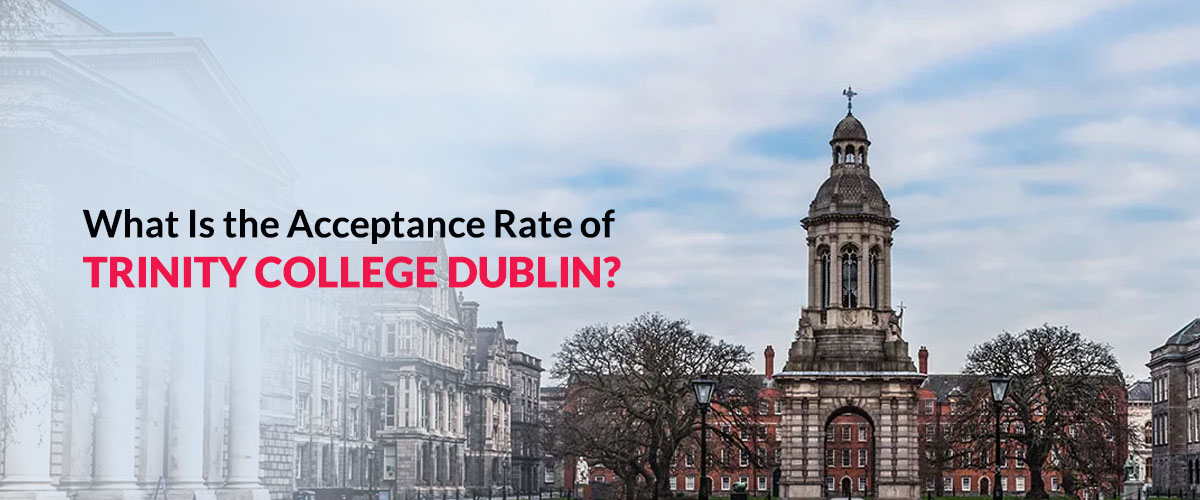
What Is the Acceptance Rate of Trinity College Dublin?

One of the first as well as most prestigious universities in Ireland is definitely Trinity College Dublin. It is the single constituent university in the University of Dublin, which was established in 1592. Recently, the universities of Ireland have been in high rankings as the world’s best higher education institutions. The history, reputation, and numerous accomplishments of the university automatically attract many applicants from within Ireland and from foreign countries for higher education. Many students dream about entering this university, so what is the probability of being accepted there? The article below will discuss the Trinity College Ireland acceptance rate. We cover several aspects of it, including the acceptance rate, decision-making factors, and concluding insights for every applicant interested.

Understanding acceptance rates

Before plunging into specific details concerning Trinity College Dublin’s acceptance rate, one should have an understanding of what an acceptance rate means and the reasons why people are concerned about the cited indicator. The acceptance rate implies the ratio of the number of students who were admitted to the relevant number of applications. This practically means that the smaller the acceptance rate, the harder it is to get into any school or college. If the acceptance rate is high, it may mean that the school is accepting any given person – the higher the ratio, the easier it is to become admitted.

Trinity College Dublin’s acceptance rate

The most recent information given today reveals that the acceptance rate of Trinity College Dublin is more than 23%. Annually, the fluctuation is approximately happening; however, it remains in the list of the smallest offered percentage by all the universities. Moreover, it states that it is approximately equal to 50% of all the universities in Ireland.

Factors influencing admission decisions

The path to college must have several possibilities. The first is academic excellence. This is because, from the high schoolers that the college admits, its choice will be those with higher grades and those who have done well in the standardised tests that make up the admission requirements. Then, they must also be achievers outside the classroom. Whether it is a sports person, a leader, a volunteer, or a creative person, they must have something outside class that they have been doing. And there must be a valid reason for wanting to be at the college. This is encapsulated in the application statement, which is known as a personal essay.

Understanding the numbers

Even though an acceptance rate of 23% may seem intimidating, it is necessary to mention that various programs and college pathways at Trinity College have different levels of competitiveness. For example, the most competitive programs, such as Medicine, Law, and Business, are likely to offer a much lower acceptance rate, while for some, this number may be higher. Moreover, the number of international applicants is also likely to vary, as the message of the college is to offer a place for an international community of students.

Increasing your chances of admission

Considering the competitive process involved in the application to gain acceptance to Trinity College Dublin, candidates intending to apply for admission to the institution must posit their best effort as much as possible. These may range from ensuring that you obtain good grades, indulge in activities that add value to the student community, write high-quality personal essays, getting strong letters of recommendation, and doing a comprehensive analysis of TCD’s programs and courses of study to make their (application materials) align with the philosophy and requirement admissibility of the college.

Early action and early decision programs

Trinity College Dublin, like many selective universities, offers two competitive programs: Early Action and Early Decision. These programs allow prospective students to apply earlier and find out the outcome of the admission process before a regular decision option. An additional advantage of the Early Action program is the possibility of non-binding, which prevents the applicant from committing to attend a university in advance.

International applicants

Trinity College Dublin admissions office strives to build a stronger, more balanced, and reflective student body of the world. Therefore, applications from outside of the college are encouraged, and the college has the tools required to help them through their admission process. All applicants are subject to the same scoring: academic records, recommendations, and enclosing writing. All other international students must stick to the same level of assessment. However, the specifics of the documents provided may vary depending on the country of origin and the level of English that will be obtained in the English medium.

Transfer students

Meanwhile, a final aspect affected by the current policies is the acceptance rate and admission experience in TCD. Although all transfer applications to this educational institution are technically quantified in terms of the subjects studied over time, the abovementioned decision is made based on students’ full academic records and supportive documents.

Financial aid, as well as scholarships

Therefore, from the perspective of this paper, studying at Trinity College Dublin demands an investment. However, the institution offers a wide variety of financial aid and scholarship opportunities, making education accessible to any student. The financial aid includes college-based and external need grants and college-based merit scholarships. Thus, any prospective applicant should seek to find and apply for these financial awards. Not only does a financial cushion ensure that a student is relieved from the financial burden, but it also serves as proof of genuine interest in learning.

Life at Trinity College Dublin

Thus, admission to Trinity College Dublin is challenging and vulnerable to competition, but the possibilities and advantages of attending this university are boundless. One gets the best education of all existing areas in an extremely exciting academic environment, learning from the best teachers and working with the latest equipment. Additionally, an endless list of superb extracurricular activities and thousands of chances to take advantage of this cozy city packed with sights are open to you. After graduating from this college, you can quickly find a job at a major company with the help of an aggressive student community.

Conclusion

The acceptance rate at Trinity College Dublin underlines the quality of the institution and the stringency of the admissions process. Having an overall acceptance rate of approximately 23%, being admitted to TCD is an achievement that requires superb academic performance, involvement in extracurricular activities, and strong application. Even though the path to Trinity College Dublin might be difficult, the benefits of attending this high-ranking university and its Trinity College Dublin masters programs are plentiful.

How do you apply for an MBA in Ireland?

Getting an MBA is a significant step, and many professional prospects are associated with it. Since the Irish economy is thriving and many well-known universities offer the best MBA courses in Ireland and it has become one of the most popular countries to go to in pursuit of developing leadership and business traits. Therefore, this instruction contains five basic Irish MBA programs’ prompts to allow applicants to apply smartly and simply.

Understand the Prerequisites

However, before engaging in your pursuit of an MBA experience in Ireland, there is a prerequisite you must look at from the target universities. In most cases, the institutions require you to have a bachelor’s degree in business or its related fields; hence, you may consider taking majors in business, economics, and any other field under management. On the other hand, most universities may also require that one must at least have two to five years of professional experience.

It is essential to review the requirements of specific programs that you are interested in since the needs may differ. Some MBA programs may be open to applicants who have bachelor’s degrees in non-business or management majors upon successful completion of prerequisite coursework in quantitative analysis, accounting, or finance or those with experience working in relevant roles.

 Academically, the English language is what is used to offer knowledge, and thus, English is a must-know. Eventually, since most Irish MBA programs are in English, grasping this language is essential. As one criterion for international applicants, information on the need for various English-language standard tests may be asked.

Research Accredited MBA Programs

There are several recognised Irish universities and business schools where it is possible to receive an accredited MBA. The honourable candidate makes a prudent choice after a deep investigation concerning the research of the program, which aligns with the academic background, professional career, and personal preferences. 

The individual looks through the MBA programs, which attract him or her by specialisation, curriculum, duration, and type of delivery. In addition, the credibility of the university and its rankings can be a factor, as well as the faculty background information or merit-based relevance. 

The fees include living expenditures that may differ depending on the city, as well as tuition fees. Also, there is an opportunity to receive need- or merit-based scholarships from particular universities, which lowers the cost of studying for the degree.

Prepare a Compelling Application

Building a strong application increases your chances of being admitted to an MBA program in Ireland. You must first closely examine all prerequisites and the application deadline set up by your preferred universities. Your application essentially has the following components: 

First, your personal statement, also known as a statement of purpose. Here, you should discuss your career goals and the reasons you attended this MBA program. Compose a captivating essay about your unique abilities and potential contributions to an MBA program following a distinct pattern. Discuss stories, thoughts, and experiences that will explain to the program’s selection committee why you are an excellent fit for business, leadership, and personal and career development. Remember to adjust your statement to meet the needs of each program and demonstrate how your background, skill, and goal alignment apply to its principles and objectives. 

Lastly, virtually all programs compel you to deliver two or three letters of recommendation, usually from employers or teachers who can confirm your academic ability, professional capacity, and personality. Select recommenders who are familiar with you and who can provide specific insights into your skills, successes, and chances of completion of the MBA program. Based on personal observation, their feedback and observations can greatly improve your application and show that an MBA program meets your needs. Make sure your reviewers can write a thoughtful letter and fully express why an MBA is a goal and the program requirements.

Prepare for Interviews and Assessment Centers

Irish MBAs often include interviews and assessment centres as a part of their selection process. Having all this in mind, they also help the admissions committee to get an insight into your dispositions and attitude, the quality of your interaction and critical thinking, and indicators of motivation for studying at the school in question. 

Although most interviews usually occur in person, it is also possible to conduct a job interview over the phone or through the many video conferencing services. Proactively prepare by researching popular search engine questions, practice responding, and, if necessary, learning more about the school, professors, and the program. 

Assessment centers involve such contests, and dabbling in group tasks, case studies, and presentations is key to showcasing your problem-solving skills, leadership abilities, teamwork spirit, and decision-making abilities. Throw yourself into the experience, evaluate it with an open mind, and don’t be afraid to reveal your capacity to play well with others.

Explore Post-Study Opportunities

Another benefit of an MBA in Ireland is the chance to get valuable work experience and even get a job opportunity after graduation. Due to a strong business background and favourable job prospects, many students decide to remain in Ireland for some time. Individuals searching for an excellent Master of Business Administration program should educate themselves on Ireland’s immigration laws and employment opportunities available to international students after completing a program.

Foreign graduates of Ireland have access to several options that could provide them with multiple working opportunities and the ability to land a job in the future: following successful completion of an accredited degree program, non-EU/EEA students may remain in the country for up to two years post-graduation under the Third Level Graduate Programme searching for a job. Many universities have career centres that can help students get a work visa or employment permit. These centres often include workshops on CV and cover letter writing, direct job application assistance through local and multinational organisations, and employment search strategies.


 Furthermore, while doing an MBA, students should begin establishing connections with alumni and professionals in their desired field. After obtaining your master’s, this bond could result in employment, internship, or mentorship. Attend industry fairs, become acquainted with professional groups, and keep in touch with your MBA program’s benefactor, business partner, and lecturer.

Conclusion

Selecting the best universities for MBA to study in Ireland and embarking on the MBA journey is an experience that can redefine your life, offering everything you need to excel in your career. It is a good start as enrolling at top MBA programs in Ireland is highly likely with this guide. Thus, follow the advice: get acquainted with the requirements, explore accredited programs, prepare an eye-catching application, be ready for the test and interview, and think about what can be done after graduation.

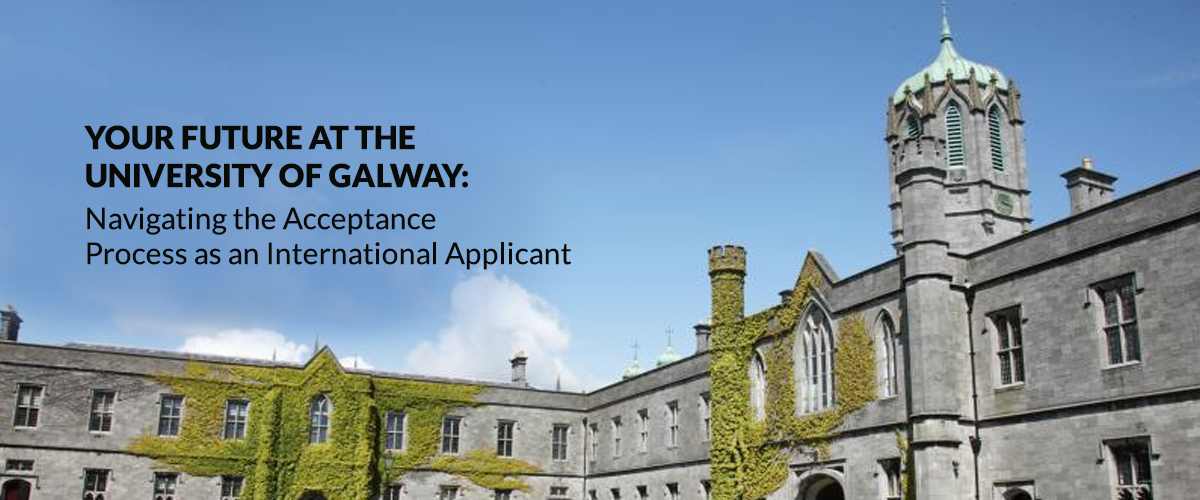
Your Future at the University of Galway: Navigating the Acceptance Process as an International Applicant

Many students all over the world aspire to pursue higher education, and the University of Galway, situated in the energetic Irish city of Galway, has grown to be a popular choice for academics from other countries. This prestigious university offers a broad academic experience in a friendly, inclusive atmosphere that values diversity. We’ll explore the universities in Ireland for international students acceptance rate in this post, along with tips and advice to aid you through the application process.

Understanding the Acceptance Rate of University of Galway Acceptance

Established as a top-tier institution, the University of Galway draws bright students from all over the world. The struggle to gain access to the university campus  and the fight for places can be very tough because of its state-of-the-art facilities, famous faculty and wide array of academic offerings. But such a high degree of competition also shows just what an institution Galway is in terms of quality. Its ability to attract talented people as students comes despite the intense rivalry created by such a large range and scale institution of higher learning. 

With such a tough admission process, it’s surprising that the University of Galway never changes ways. The institution, instead of selecting only students who have a certain kind of mind, beckons individuals with all sorts of intelligences. Moreover, it offers chances for all sorts of students to get involved in the subject. The result is that many differing viewpoints and ideas intersect here and we achieve a better understanding, together with respect for the intricacy of our world.

Factors Influencing Acceptance

The reasons for the University of Galway’s acceptance rate for overseas students are definitely multifaceted. Each person’s academic success is shown in transcripts and standardised test scores, and this forms the core of how applicants are judged. That is in addition to a student’s self-discipline and ability to meet the demands of academic life on a campus far from home.

To engage fully with course material and take part in class discussions, students must be able to communicate well in English, so this is also an important factor at the institution. Applying for a leadership position, extracurricular activity and community service records prove an applicant’s range and time-management skills. They reveal how deeply an individual is committed to developing himself personally outside the classroom.

How to Apply: Step-by-Step Admission Process

Understanding the application requirements is an important step for international students planning to study at the University of Galway. Many students choose to seek guidance from experienced education consultants such as NewStrides, who help them understand eligibility criteria, required documents, and programme expectations.

  • Explore Program Requirements

The University of Galway offers a wide range of programmes in business, science, engineering, arts, computer science, and other fields. Each course has specific academic expectations, curriculum details, and subject prerequisites. Reviewing these helps you identify the programmes that best match your academic profile.

  • Academic Eligibility Criteria

Undergraduate applicants must meet the required higher secondary grades and subject combinations. Postgraduate applicants are assessed based on their bachelor’s degree, CGPA, and academic background in relevant subjects. Some programmes may request additional materials such as portfolios or proof of work experience.

  • English Language Proficiency

International students must submit valid IELTS, TOEFL, or PTE scores. Each programme specifies a minimum score that applicants must meet to be considered for admission.

  • Supporting Documents

Applicants must prepare essential documents such as academic transcripts, degree certificates, a valid passport, English test results, a CV, letters of recommendation, and a personal statement. The personal statement should explain your academic interests, achievements, and reasons for choosing the University of Galway. Consultants like NewStrides can assist in preparing and reviewing these documents to ensure accuracy and completeness.

  • Offer Letter Conditions

After evaluation, eligible students receive a conditional or unconditional offer. It is important to read the offer carefully, including conditions, fee details, and submission deadlines.

  • Visa and Accommodation Preparation

Once the offer is accepted, students can begin preparing for their Ireland student visa and start looking for accommodation options early to secure availability during peak intake periods.

Disclaimer: These are general application requirements. Programme-specific criteria may vary. Students are advised to connect with trusted agents like NewStrides for the most accurate and updated information.

English Language Proficiency

Proficiency in the English language is a mandatory requirement for international students who wish to enrol in the University of Galway’s academic program. The university is aware that good communication is essential to a fruitful and fulfilling educational experience since it allows students to actively participate in class discussions, completely connect with the curriculum, and express their ideas clearly and precisely.

All overseas candidates must meet strict English proficiency requirements set by the University of Galway in order to guarantee that incoming students have the requisite language skills. This can be done by achieving the targeted scores on well-known standardised examinations like the TOEFL or IELTS. A candidate who performs well on these tests not only demonstrates their proficiency in written and spoken English, but also their capacity to understand challenging academic literature, develop persuasive arguments, and work well with colleagues and instructors.

Extracurricular Activities and Personal Statements

Academic success is important, but the University of Galway also appreciates well-rounded people who have participated in extracurricular activities as well as shown leadership abilities. Your distinctive skills, passions, and dedication to self-improvement can be highlighted via involvement in organisations, athletics, volunteer work, or the workforce. Furthermore, your application may be greatly impacted by a strong personal statement that clearly conveys your objectives, in addition to driving forces, along with potential contributions to the academic community.

Programs and Opportunities

Undergraduate and graduate degrees in a wide range of subjects, including the arts, sciences, business, along with engineering, as well as more, are available at the University of Galway. There are plenty of options for intellectual inquiry and career advancement in the university’s broad curriculum, regardless of your preference for following a traditional area or an integrative one.

Research Excellence

The University of Galway is known for its dedication to high-quality research. The institution is home to renowned research centres, alongside state-of-the-art labs, as well as cutting-edge facilities that promote creativity and ground-breaking discoveries. International students can work with distinguished faculty members on research projects, participate in the progress of knowledge in their field of study, as well as more.

Student Life and Support Services

The dynamic campus life of the university is wonderfully complemented by Galway, a bustling in addition to a culturally diverse city. A comprehensive experience that goes beyond the classroom is provided by the University of Galway, which includes student organisations and societies, a range of social events, and outdoor activities. International students have the opportunity to become fully integrated into a multicultural society, create enduring connections, as well as broaden their worldview.

Support Services for International Students

In order to facilitate a seamless transition as well as a fruitful academic career, the University of Galway offers specialised support services in recognition of the particular difficulties encountered by overseas students. These services include initiatives for cultural integration, language assistance, in addition to academic guidance, alongside orientation activities. The university’s International Office is also a great resource, providing advice on social activities, in addition to housing, along with immigration laws.

Conclusion

The esteemed University of Galway provides international students with a vibrant, welcoming environment in addition to a top-notch education. Strong academic standing, fluency in English, participation in extracurricular activities, alongside an effective personal statement can greatly increase your chances of admission, even if the acceptance rate can be challenging. Accepting the university’s commitment to excellence, diversity, as well as global involvement will set you on a transformative path that will influence both your career alongside personal development. Set out on this thrilling journey to study in Ireland in the University of Galway and open up a world of potential.

Frequently Asked Questions

What are the University of Galway admission requirements for international students?

Requirements include academic transcripts, English proficiency test scores, letters of recommendation, a personal statement, and a valid passport. Postgraduate applicants may also need relevant work experience.

What are the tuition fees for international students at the University of Galway?

Tuition fees vary by programme, generally ranging from €17,000 to €25,500 per year for most undergraduate and postgraduate courses.

What scholarships are available for international students at the University of Galway?

International students can access merit-based, region-specific, and programme-specific scholarships at the University of Galway, offering partial tuition fee reductions for eligible high-achieving applicants across undergraduate and postgraduate courses.

What is the English language proficiency requirement for the University of Galway?

Most University of Galway programs require an IELTS score of 6.5 overall, or equivalent TOEFL or PTE results. Some courses may set higher English language requirements for admission.

When are the application deadlines and intakes?

The main intake is in September, with applications typically opening in October of the previous year. Some programmes also offer a January intake.

What is the ranking of the University of Galway globally?

The University of Galway consistently ranks among the top global universities and is well-recognised for research excellence, teaching quality, and student satisfaction.


Top Facts about Pursuing Masters in Ireland

Ireland is a captivating destination that attracts students from all over the planet seeking high-quality education and a totally amazing experience. This country is famous for its picturesque landscapes, friendly locals and rich cultural heritage. It provides a distinctive blend of exciting student life, academic excellence and myriad career opportunities.

In case you intend to pursue a Master’s Degree, Ireland must surely be a prospective destination on your radar. Universities in Ireland for MS are some of the top-notch institutions in the world.

About Ireland

Known as the Emerald Isle, Ireland is an island nation that is part of Western Europe. It comprises two parts: Northern Island and the Republic of Ireland. 

Northern Island is part of the UK, while the Republic is part of the European Union. It is famous for its fabulous landscapes like rugged cliffs, rolling hills and scenic coastal regions.

The country places an onus on education; it is renowned for its much-esteemed universities and high standards for academics. In the past few decades, Ireland has witnessed much economic growth that has transformed it into a hub for finance, pharmaceuticals, technology and research. The latter are excellent avenues for career prospects after pursuing Masters in the country.

Why pursue masters in Ireland?

  • Excellence in academics

The country boasts of rich traditions in academics and research; many Irish universities enjoy worldwide reputation for delivering education of high quality, opportunities for cutting-edge research and a strong focus on practical learning.

  • Offerings of diverse courses

Ireland provides an extensive range of Master’s programs ranging from business and engineering to the social sciences or arts. Such programs cater to varied career aspirations and diverse interests.

  • Multi-cultural ethos

Ireland is a melting pot of diverse cultures, making it a welcoming and inclusive location for foreign students. As a student, you will gain the opportunity to interact with students from all over the world, helping to create life-long friendships and build a global network of peers.

  • Opportunities for employment

The country has a thriving employment scene, particularly in sectors such as research, finance, pharmaceuticals and technology. When you complete Masters from Ireland, you can gain access to amazing career opportunities and enhance your employability across the world.

  • Rich lifestyle and culture

There is a rich blend of nature and urban landscape in this country, featuring vibrant cities and stunning scenery. Students can experience an unforgettable experience thanks to the lively social life, rich traditions and amazing history of this land.

  • Masters of short-tenure

In contrast to other countries, where most master’s degrees are two-year courses, Ireland has one-year master’s courses. Students can use the extra one year to acquire some work experience and use the knowledge gained for seeking placements.

  • Hub of leading global companies

It is natural that the more the number of leading global companies in a country, the greater are the career opportunities. Many global companies like IBM, Google, Abbot, Facebook, Twitter, etc. have established their head-quarters of Europe in Ireland.

  • Safe environment

The locals of Ireland are very friendly to foreign students. Ireland is a peaceful country with a welcoming ethos. You can hope to have an amazing experience in a secure ambience. As regards the safety of women, the country ranks 7th in Europe and 16th in the world.

  • Favourable policies for immigration

Ireland has an attractive immigration policy permitting non- EEA (European Economic Area) students to remain in the country after education and explore local opportunities for careers.

Eligibility for MS programs

In order to pursue a Master’s degree in this country, foreign students need to meet certain stipulations before submitting their applications. 

Most universities demand that students should have acquired a Bachelor’s degree or its equivalent from a recognised institution.

Since the language of instruction is English, there is a need for language proficiency. Certain colleges in Ireland for Masters also demand a level of work experience in the intended field of study. Some Masters courses may even feature entrance exams to enrol.

Scholarship programs

Ireland offers a variety of scholarships to deserving candidates, such as:

  • Government of Ireland scholarships: for foreign students. An example is the Post-graduate Scholarship Programme.
  • University-specific scholarships
  • Erasmus Mundus Scholarships: Funded by the EU for Master’s degree programs.
  • Foundations’ & NGO’s scholarships.

Cost of study

Compared to countries like the US and Canada, the cost to study in Ireland for Indian students is much more affordable. The cost can vary based on the lifestyle of the student, the university and the specific program of study. The following are the major costs:

  • Tuition fees: On average, they can range from 10,000 to 20,000 Euros per year.
  • Living expenses: Range from 10,000 to 12,000 per year.
  • Health insurance: Ranges from 300 to 600 Euros per year.
  • Books and supplies: Range from 500 to 1000 Euros per year.
  • Transport: Public transport costs 50 to 100 Euros per month.
  • Leisure and social activities: Students also need to budget for these.

Opportunities for career

When you procure a Master’s degree from Ireland, it can boost career prospects, both in Ireland and the rest of the world. The Irish government has begun to offer a post-study work visa of 2 years to Indian students.

Graduates can find jobs in government organisations, MNC’s and research institutions. The technology sector in the country dubbed as the ‘Silicon Docks’ of Dublin provides many opportunities for the professionals who are tech-savvy.

The focus on R&D in Ireland creates much demand for scientists and skilled researchers in different fields. Some masters degree holders also become entrepreneurs since Ireland has an eco-system which is start-up friendly.

Some of the leading career opportunities in Ireland include:

  • Technology sector: software engineering, computer science, cyber security and data analytics
  • Pharmaceuticals and life sciences
  • Financial services: investment banking, risk analysis, financial consulting and asset management 
  • Research and academia
  • Construction and Engineering: civil, mechanical and electrical engineering

Top Universities

There are several universities in Ireland that are highly reputed for academic excellence and cutting-edge research. These include the following:

  • University College Dublin
  • Trinity College Dublin
  • University of Galway
  • University College Cork
  • Dublin City University
  • Maynooth University
  • University of Limerick
  • Technology University Dublin
  • Munster Technological University

In sum, pursuit of a Master’s degree in Ireland provides many opportunities and benefits for students who are attempting to improve their academic credentials and career paths. The highly reputed educational system of Ireland, combined with the vibrant economy, diverse courses and rich cultural heritage, renders it as a perfect location for higher studies.

Why Indian Students Go Abroad For Higher Studies

For Indian students, studying abroad in some leading countries is the door to many new opportunities and a fabulous career. According to RedSeer, by 2024, nearly 2 million Indian students will spend almost $85 billion studying higher education courses abroad.

India is a highly populous country, and there is intense competition for educational courses and high-paying jobs. A degree from top countries like US, Canada, UK, Ireland, Germany, Switzerland etc. is the key for Indian students to succeed in education, employment and research.

Reasons why Indian students go abroad for higher studies:

Wide Options

One of the main reasons why Indian students are heading abroad is the sheer variety of courses to opt from. In spite of the swift progress of higher education courses in India, most universities only offer conventional courses in a limited way. Indian students are forced to join such courses because of a lack of other options. For example, there is a high demand for courses in engineering and medicine, with tight competition for the best institutes.

But as regards education in foreign shores, there is a wide variety of courses to choose from and there are many colleges and universities to choose from, like universities in Ireland for master’s degree programs. Quality education can be accessed from top-notch institutions. Indian students can also opt for courses in their wide fields of interest.

Easy Process of Admission

In the case of most study abroad programs, the process of admission is quite simple. There is no need for individualised entrance tests or interviews. The only requirement is to submit your transcripts and other simple documents to the specific universities. Some institutions also offer scholarship programs for foreign students.

In India, top-tier institutions with much fewer seats have a high level of competition for the millions of students seeking them. But the latter can gain access to such courses in an easier way to top colleges abroad. By studying at a foreign university, Indian students can escape this rat race for top Indian colleges and achieve their dream jobs.

Access to Take Part in Research

Indian students trying to study abroad do so in order to get the opportunity to take part in cutting-edge research at many universities abroad. Such facilities offer the opportunity to take part in some of the leading research work in the world. Also, students can access state-of-art resources and equipment which might not be possible in India.

When students work with expert and experienced faculty members, they can learn much in the fields of their interest and develop the knowledge and skills required for success in the careers of their choice.

With a degree from a highly reputed foreign university, there is much increase in research prospects of Indian students. Firstly, top institutions of research will be much more open to welcome them. Secondly, experience in research in foreign institutions will help Indian students to work for research projects in prominent businesses like Apple, Google or Microsoft.

High Quality of Education

One of the main reasons why Indian students are travelling abroad for higher studies is the higher quality of education and opportunities for work. The system of education in India often faces criticism for being rote or memory-based rather than being based on creativity and critical thinking.

Students who go abroad for higher studies mostly find that they can learn in a more effective manner and gain a deeper insight into the subject matter of the course of their choice, because of the superior quality of education. Also, they gain access to facilities and resources of better quality that can make a huge impact on the overall experience of learning.

Developing a Global Mindset

There has been a coincidence of rising globalization with the trend of Indian students studying abroad. Thus, there is much demand for the development of a ‘global mindset’. The latter is defined as ‘a set of beliefs and attitudes which enable persons to function effectively in a highly interdependent world.’

The development of a global mindset is one of the main reasons why Indian students are so obsessed with pursuing higher studies abroad. One way to do this is by arrangement of study in Ireland for Indian students and even in other leading countries. With greater integration of the Indian economy with the global economy, there is a need for Indian students to gain a global perspective for the sake of successful careers.

Cultural immersion is a major way to develop a global mindset and this can be experienced when Indians study abroad and interact with students from all around the world. Through living and interacting with the latter, Indian students learn to think outside their cultural framework and learn to be open-minded. 

They also gain the valuable skills of inter-cultural communication and adaptability which are useful in the modern workplace. Because of the growing inter-connection of the world, there is a need to develop respect for people and ideas of the whole world.

Superior Life Experiences

Another major reason to study abroad is the opportunity for better life experiences. Pursuit of studies in a foreign country reveals to students, exposure to new ideas, peoples and cultures. This can help in developing a more broad-based world-view. Students who pursue higher studies abroad help gain a broader point of view towards other cultures and persons.

For Immigration

Indian students also pursue higher education abroad with the objective of moving from India to a foreign country by immigration. Thus, the main reason for studying abroad is to immigrate to that country. Countries like the USA and Canada are welcoming immigrants to their shores by offering attractive opportunities for employment. As per recent research, 80% of Asian students choose to continue to live abroad after gaining their degrees. The majority of Indians consider foreign degrees as an amazing opportunity to live and work abroad.

Learn to be Independent

Studying abroad is a great way to become independent and responsible. It is quite exciting and challenging to throw yourself into a totally new environment.

Make Enduring Connections

Indian students studying abroad are able to forge life-long connections with persons from other countries and backgrounds. For one, they will become familiar with the local culture of the country where they are studying. This will help in making friendships that endure for a long time.

In sum, these are the main reasons why Indian students are hankering to pursue higher studies abroad. They wish to make use of the potential for a bright future after gaining the imprint of a foreign degree on their resume. They will become fit for a modern career because of their global mindset.

Consult our Admission Experts for FREE

Make the Right Choice For
Your Academic Future